
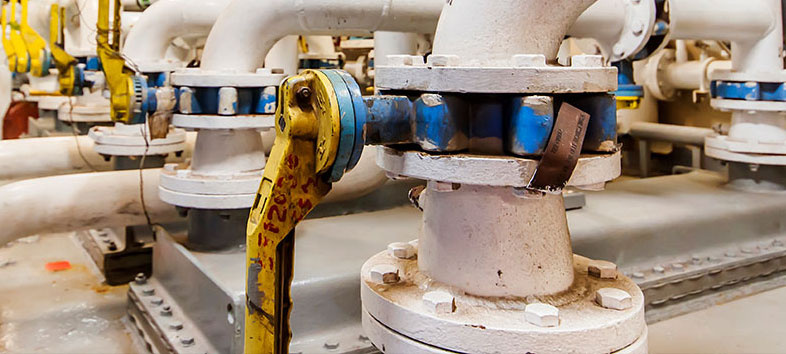
ENVSonic ultrasonic antifouling keeps box coolers, sea chests, strainers and raw-water pipework at design cooling capacity and flow, continuously and without biocides, anodes or docking. Cooling is critical to the serviceability and integrity of every vessel: fouling cuts flow, lifts temperatures and ends in blockages, failures and unplanned repairs, which is why operators from Asia-Pacific tug fleets to MRL Resources now specify ENVSonic cooling-system protection at build.
Where fouling bites
Raw seawater is the coolant for almost everything that matters on board: main engines, generators, air conditioning, hydraulics and refrigeration. Box coolers, sea chests, strainers, plate exchangers and the pipework between them are warm, dark and continuously wetted, so they are the first surfaces to foul and the ones that fail first. The symptoms arrive in order: cooling capacity drops, jacket-water temperatures climb, strainers block, engines derate, and the fix is a diver, a dose of chemicals or a lid off the pressure vessel in a yard.
Stationary and slow assets foul fastest. A box cooler that lasts a docking interval on a vessel trading between ports can foul visibly within months on a processing barge, a laid-up ferry or a tug that spends most of its day alongside in a warm harbour.
How ENVSonic protects it
Transducers bond to the dry side of the cooler, sea chest, strainer body or pipe via the proprietary footprint and transmit curated bursts of ultrasonic energy into the structure. At the wetted surface the pressure variations form microscopic non-inertial cavitation that stops larvae, algae and bacteria settling. Nothing enters the water, nothing is dosed, and there is no anode to replace.
- Box coolers and plate exchangers: cooling capacity held at design across the docking interval, so engines run at rated load.
- Sea chests and strainers: baskets stay open and the clean-out cycle stops driving the maintenance plan.
- Raw-water pipework, valves and intakes: flow rates held, no scaling and no biological build-up through the run.
Installation
No drilling, no welding and, for most installs, no docking. Transducer positions are set from the general arrangement and the cooler drawings; the control module sits in the engine room on DIN rail or in a cabinet, with ENVS1 providing four or six channels per module and cabinets combining modules for 6 to 54 channels. Each transducer is tested and calibrated daily, and shuts down automatically if it becomes unbonded. Retrofit in service is routine: two Australian Ro-Pax ferries were fitted around a live timetable, and a 25-tug Asia-Pacific fleet started as a two-vessel pilot on strainers, pipework and plate exchangers.
Marine growth prevention for niche areas
Sea chests, box coolers, strainers and sea inlet pipes are the niche areas IMO’s 2023 Biofouling Guidelines single out: the internal surfaces and gratings of sea chests “should be protected by an AFS that is suitable for the flow conditions”, and the guidelines’ example plan lists ultrasound among the marine growth prevention system (MGPS) types. ENVSonic is that MGPS: list it in the biofouling management plan against the areas it protects, and log its checks in the Biofouling Record Book. MGPS, niche areas and the biofouling management plan →
What changes in service
Cooling held at design, no chemical dosing, no diver cleans of the sea chests and no cooler lids off for growth. On S/Y Encore the raw-water pipework came through full survey after thirteen years with no scaling, no biological growth and no corrosion build-up. In Australia the same protection removes the fouled niche areas that attract biosecurity inspection under the Australian Biofouling Management Requirements. Put your own cleaning, downtime and dosing figures into the ROI calculator →
Does ultrasonic antifouling work on box coolers?
Yes. Box coolers are the most common ENVSonic application: transducers bond to the dry side of the cooler via the proprietary footprint, with no drilling of the pressure vessel, and hold cooling capacity at design across the docking interval. MRL Resources specified it at build for four 184 m processing barges, and an Asia-Pacific towage operator runs it as standard on more than 25 tugs.
Does ENVSonic replace impressed-current (ICAF) anodes in the sea chest?
Yes. ENVSonic has no anodes, no consumables and releases nothing into the seawater, so the anode replacement and dosing cycle on sea chests and strainers stops. Each transducer is monitored and calibrated daily by the control module.
How many channels does a cooling system need?
It is confirmed from the cooler, sea chest and strainer drawings. A typical workboat seawater system runs four or six channels from one ENVS1 module, panel-mount or DIN-mount; larger cooling systems use cabinets of 6 to 54 channels, sized to the application.
Can it be fitted to a vessel in service without docking?
Yes. Transducers bond to the dry side of coolers, sea chests, strainers and pipework, inside the vessel, so most cooling-system installs are done in service. Two Australian Ro-Pax ferries were retrofitted around a live timetable.