
Technology
How ultrasonic antifouling works. Sound, not chemistry.
ENVSonic is an ultrasonic antifouling system, developed and built by GLOBAtech Australia since 2006, that prevents biofouling with sound instead of biocides. Curated, targeted bursts of ultrasonic energy are transmitted through bonded transducers into the structure. Pressure variations in the water form microscopic non-inertial cavitation at the surface: agitating it, rupturing algae and bacteria cell walls, and making it uninhabitable for settling larvae. Nothing enters the water column.
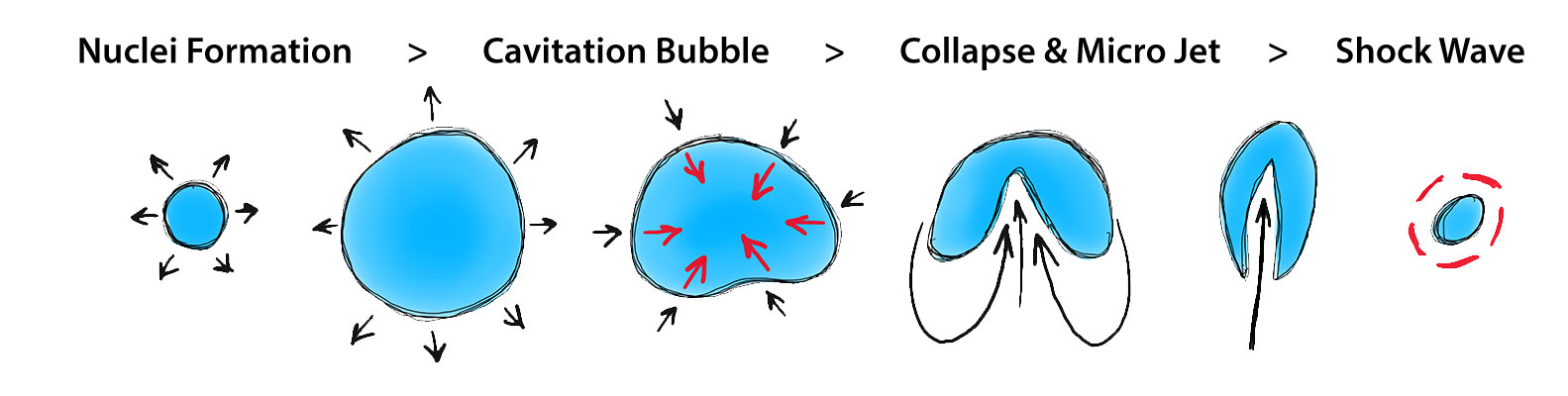
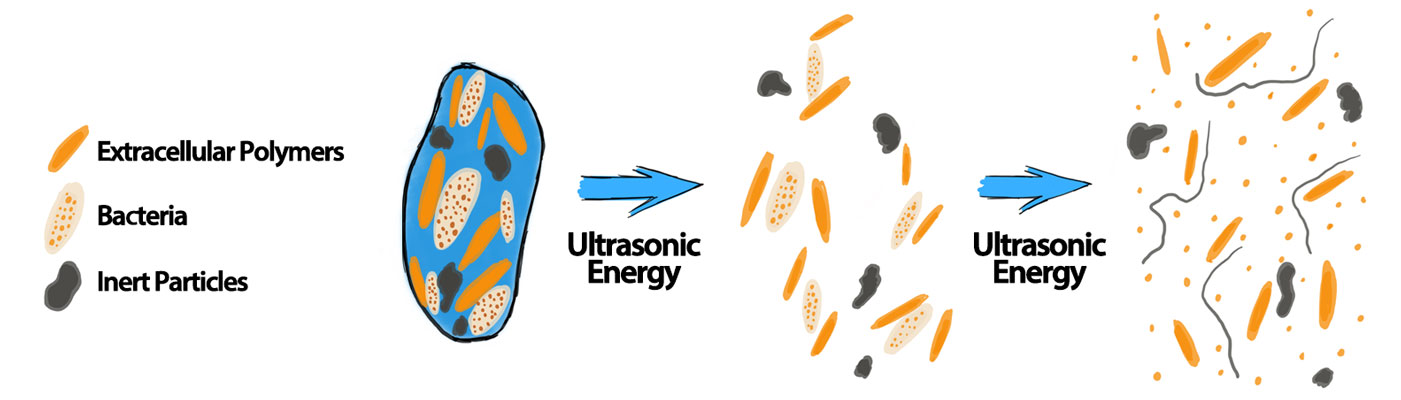
Fig. 1 — Non-inertial cavitation at the surface · Fig. 2 — Acoustic disintegration of algae & bacteria
How ultrasonic antifouling keeps a surface clean
- The transducer bonds through its footprint to the inboard side of the plating, inside the vessel.
- Short bursts of ultrasound travel through the steel.
- At the wetted surface the ultrasound drives non-inertial cavitation: a thin, constantly disturbed layer where larvae, algae and barnacles cannot settle.
- Nothing is released into the water: no biocide, no anodes.
ENVSonic in brief
ENVSonic is the ultrasonic antifouling system designed, built and supported by GLOBAtech Australia, the original OEM in the category since 2006.
See the evidence →- What it is
- An ultrasonic antifouling system: bonded transducers drive non-inertial cavitation at the protected surface so larvae, algae and barnacles cannot settle. No biocide, no anodes, nothing released into the water.
- Who makes it
- GLOBAtech Australia Pty Ltd, Coomera, Queensland: the original ultrasonic antifouling OEM, designing and building the system end to end since 2006.
- Track record
- 35,000+ units deployed worldwide on commercial fleets, workboats, superyachts, processing barges and industrial cooling plant; case studies on the evidence page and fleet references on request.
- Certification
- FCC · CE · RCM for the complete system, control module to transducer, not the controller alone. Three-year warranty, or five years with a Monitoring & Maintenance plan.
- What protects it
- Proprietary footprint mount with up to 30% more ultrasonic transference; hermetically potted IP68 transducers; per-channel monitoring with daily self-calibration and unbonded-transducer shutdown.
- Range
- ENVS1 for vessels, fleets and industrial raw-water systems (4 and 6-channel modules, panel-mount or DIN-mount, cabinets from 6 to 54 channels); ENVS2 for deep-ocean and high-output work; ENVS2.sXDCR MAX smart transducer coming (patent pending).
- Installation
- Transducers bond to the inside of the structure: no drilling, no welding and no docking for most installs; retrofit in service or specified at the drawing stage.
The system
Three parts. One OEM.
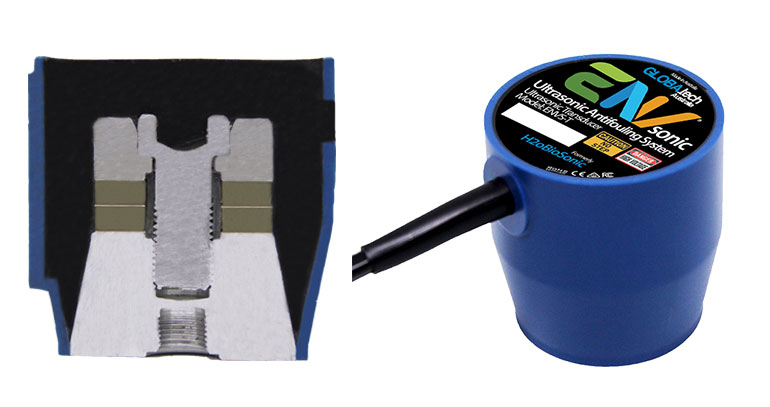
A — Transducer
Advanced technology. Small package.
Proprietary primary and secondary mass materials matched to the drive, a treated PVC shell and industrial silicone-rubber tinned-copper cable. Every unit is analysed, then hermetically sealed by degassed potting to IP68 beyond 10 m, so the same transducer serves a dry box-cooler install or a flooded ballast tank for the life of the vessel. ENVS1.T50 and T60 in service; T100 next.
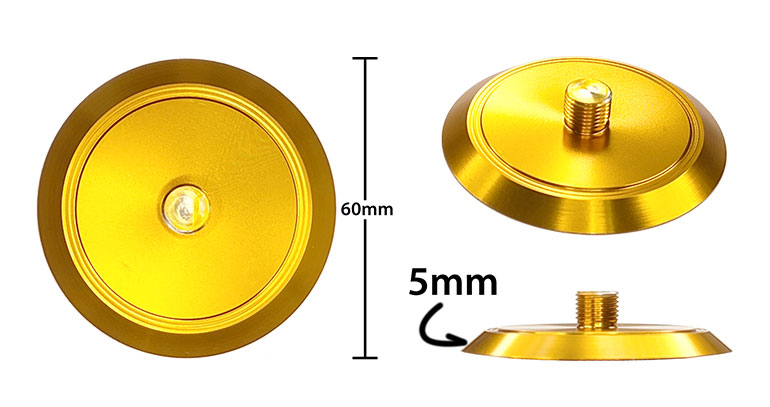
B — Proprietary footprint
Monolithic with the structure.
The proprietary ENVSonic footprint makes the transducer monolithic with the structure: a watertight seal, electrical isolation and up to 30% more ultrasonic transference than grease or isolated-face mounts. No silicone grease to break down, no coarse plastic threads to loosen, no drilling of the pressure vessel, and inspection requirements cut.
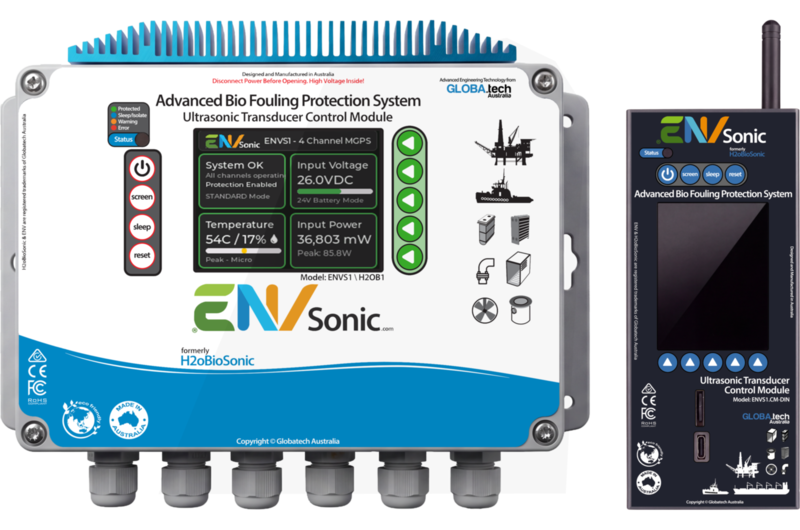
C — Control module
Self-aware. Per channel.
Measures temperature, voltage, input and current continuously and runs a proprietary algorithm to shape the output to the installed environment. Monitors each transducer’s health, calibrates every channel daily, detects an unbonded transducer and isolates it before damage, and records lifetime data for the dashboard and SCADA. Four or six channels per module, combined in cabinets from 6 to 54 channels.
One system: module, cabling, transducers
- Control module: 4 or 6 channels each; cabinets combine modules for up to 54 channels.
- One transducer per channel, on its footprint.
- Every channel is tested and calibrated daily. A transducer that loses its bond is detected and shut down.
- Channel health is shown on the module and recorded on the dashboard where fitted.
Why ENVSonic leads
What sets ENVSonic apart from other ultrasonic antifouling systems?
Six differences an engineer can check, each with the fact behind it. See the evidence →
GLOBAtech Australia has designed, built and supported ultrasonic antifouling for two decades, with 35,000+ units deployed. Transducers, footprint, electronics and firmware are all ours. Our story →
FCC, CE and RCM certification across control module, cabling and transducers, not the controller alone. Certification questions →
Every transducer is tested, calibrated daily to its installed environment, and isolated automatically if it becomes unbonded. Lifetime data to the dashboard and SCADA.
Up to 30% more ultrasonic transference than grease or isolated-face mounts, a watertight seal and electrical isolation, with no drilling of the structure. Transducers and footprint →
An Asia-Pacific towage operator went from a two-tug pilot in 2021 to standard ENVSonic fitment across more than 25 tugs in five classes, installed about five times faster than multi-cable systems. Case study →
S/Y Encore’s seawater systems, fitted at build in 2013, passed full survey with no scaling, no biological growth and no corrosion build-up, with no dosing in between. Case study →
Full power, in bursts
- Every burst is driven at the full 60 W rating.
- Between bursts the transducer rests: protection does not need it on all the time.
- Averaged over the cycle, a transducer typically draws 6 to 8 W.
Features
Built for the engine room
FCC, CE and RCM certification for the complete system: control module, cabling and transducers, not the controller alone.
Native 12 / 24 VDC, 100–240 VAC, dual uninterruptible AC/DC options.
Automatic individual calibration and targeted algorithms for the installed environment.
Every transducer monitored, tested and individually isolatable. 4- and 6-channel modules; cabinets from 6 to 54 channels for larger installs.
Economy · Standard · Boost at the touch of a button for power-conscious environments.
Hull/Chest · Box cooler · Heat exchanger · Running gear · Pipe · Water column.
SCADA and vessel-monitoring integration with isolation control, alert output and 4 / 8-hour sleep.
IP67 polycarbonate enclosure, anodised heatsink, gold-plated, lead-free, conformally coated PCBs (RoHS-compliant control module), internal fused protection.
FCC, CE & RCM across the entire system. Three-year warranty, or five years with a Monitoring & Maintenance plan. Real-time lifetime data recording.
From workboat to deep ocean
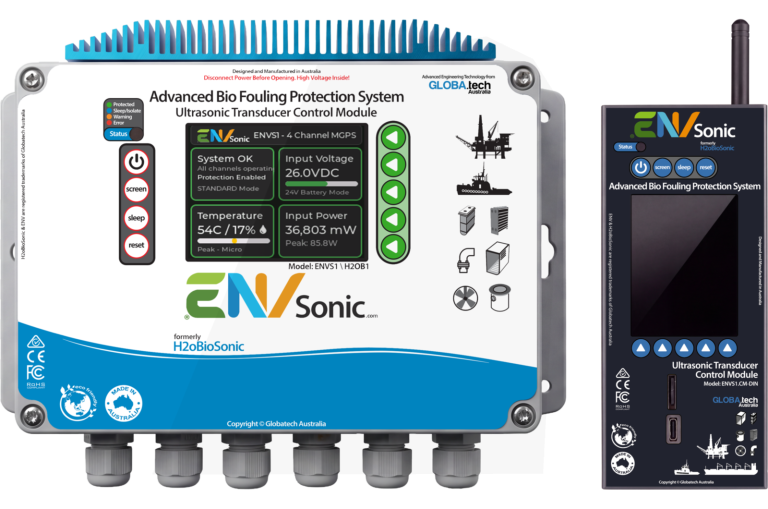
ENVS1 is ENVSonic’s vessel, fleet and industrial range: four- and six-channel control modules in panel-mount or DIN-mount versions, combined in cabinets from 6 to 54 channels, every channel tested, calibrated daily and isolated automatically if a transducer unbonds, with three power modes and native 12/24 VDC plus AC options. It protects box coolers, sea chests, strainers, raw-water pipework, running gear and hull plating, is certified FCC, CE and RCM as a complete system, and is standard fitment across a fleet of more than 25 Asia-Pacific harbour tugs, with more than a decade in service worldwide.
NewENVS2 is ENVSonic’s deep-ocean and high-output range: higher-power equipment for large plate areas, long cable runs and fleet-scale deployments, with remote monitoring and control over the dashboard and SCADA. The range takes in cabinet-mounted systems, smart transducers and equipment for propellers and running gear, built on the same IP68 transducers, proprietary footprint and self-aware channel control proven across 35,000+ ENVSonic units. Sea chests, coolers and running gear are addressed today; full external hull coverage at deep-sea scale is the frontier the programme is engineering, as the founder letter sets out.
ENVS2.sXDCR MAX is the next ENVSonic release: sXDCR stands for Smart Transducer, ENVSonic’s patent-pending transducer architecture for the deep-sea commercial hull, the unsolved part of the problem described in the founder letter and the frontier of twenty years of ultrasonic antifouling engineering. Reveal pending; register interest for the release.
Register interest →How does ultrasonic antifouling stop marine growth?
Transducers bonded to the structure transmit targeted bursts of ultrasonic energy through the metal. At the wetted surface the pressure variations form microscopic non-inertial cavitation that ruptures algae and bacteria cell walls and makes the surface uninhabitable for settling larvae. Nothing is dosed and nothing enters the water column.
Is ENVSonic certified for use on ships?
ENVSonic is certified FCC, CE and RCM as a complete system: control module, cabling and transducers together. Certificates are available on request, and the spec-in pack includes them for class submissions.
Does installing ENVSonic need dry docking or through-hull fittings?
No. Transducers bond to the inside of the structure via the proprietary footprint, so most installations need no drilling, welding or docking. The exception is cable penetrations inside ballast tanks, which need class approval and are planned at a docking.
How is ENVSonic different from impressed-current antifouling (ICAF or MGPS)?
Impressed-current systems release copper or other ions into the seawater from anodes that sit in the sea chest or strainer and need replacement. ENVSonic releases nothing, has no anodes or consumables, needs no penetration of the pressure vessel, and reports the health of every transducer daily.
How many transducers does a tug or workboat need?
It is confirmed from the general arrangement and the cooler and strainer drawings. A typical workboat seawater system runs four or six channels from one ENVS1 control module, panel-mount or DIN-mount; larger hulls and multi-structure installs use cabinets of 6 to 54 channels. Send the GA and the engineering team returns a transducer plan within two working days.
Talk to the engineers who built it
As the OEM we design the transducers, footprint, electronics and firmware, build them in Australia, and support every system end to end, backed by a three-year complete-system warranty, or five years with a Monitoring & Maintenance plan.