
Why specify it
An antifouling system that adds no penetrations
Owners are asking for biofouling protection in the specification, and the conventional systems each cost the yard something: anodes and fittings on the wet side of the sea chest, dosing lines, or penetrations that need class approval.
ENVSonic bonds to the dry side of the structure. For the yard that means no through-hulls, no welding, and cable routes that follow the rest of the electrical package. For the owner it means cooling systems, running gear and hull plating protected from delivery, with nothing to replace.
What the yard receives
A package the electrical team can build from
- Transducer plan marked on the general arrangement, with positions set from frame spacing and the cooler and sea chest drawings.
- Cable schedule and integration drawings for the electrical package: supply, isolation input and alert output.
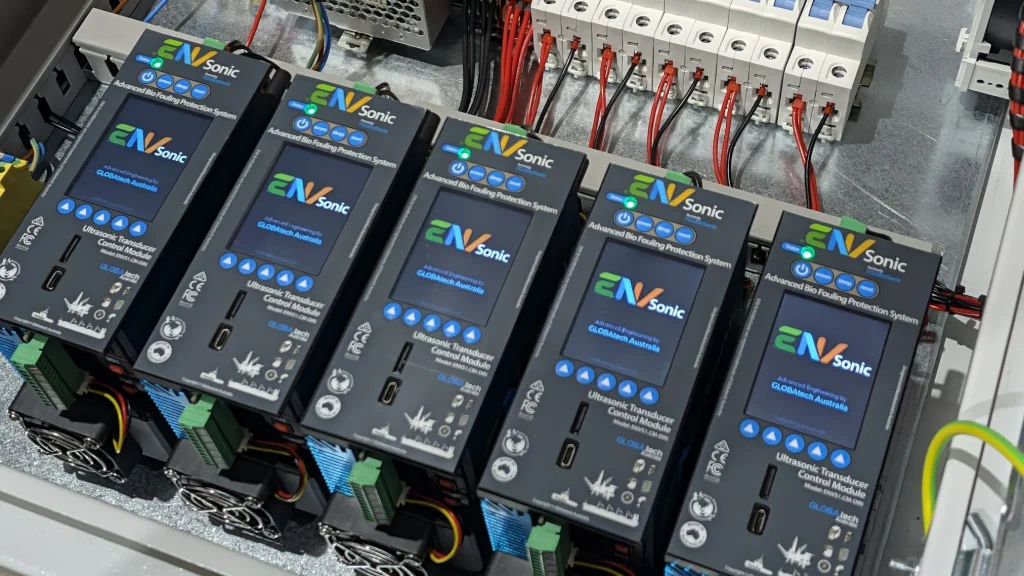
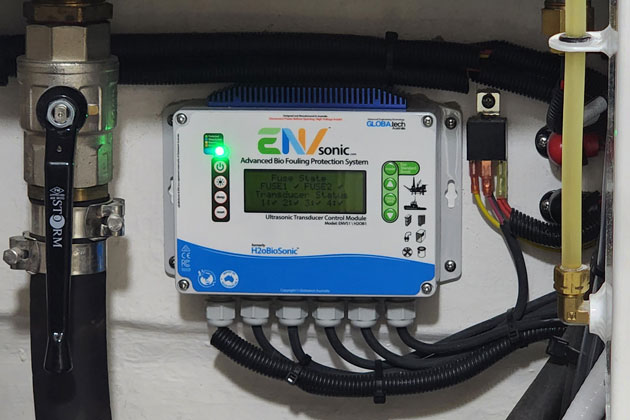
- Control hardware to suit the vessel. Four- and six-channel ENVS1 modules, panel-mount or DIN-mount; wall-mounted cabinets of DIN modules from 6 to 54 channels, with cables entering from below.
- Certificates. FCC, CE and RCM for the complete system, with the installation and operation manuals.
- Commissioning support from the engineering team that designs and builds the system, and a three-year warranty that starts at commissioning.
One system: module, cabling, transducers
- Control module: 4 or 6 channels each; cabinets combine modules for up to 54 channels.
- One transducer per channel, on its footprint.
- Every channel is tested and calibrated daily. A transducer that loses its bond is detected and shut down.
- Channel health is shown on the module and recorded on the dashboard where fitted.
Specified at build
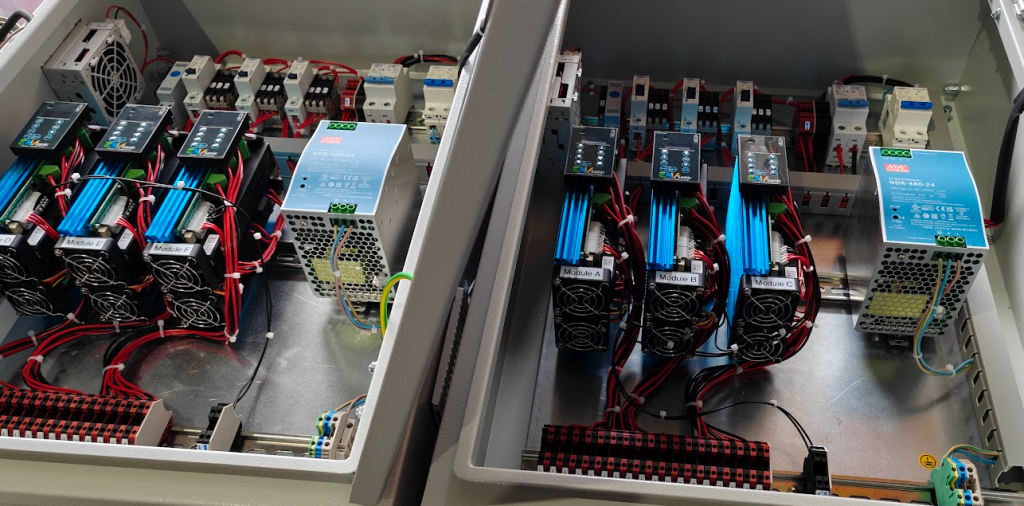
Cochin Shipyard SOV: two 18-channel cabinets from 6-channel DIN modules
Yard-specified cabinets built from the same DIN module used on a four-channel workboat system.
Asia-Pacific tug fleet: from a two-tug pilot to standard fitment across 25
Pilot validated in service; ENVSonic now standard on every newbuild from the designated builder.
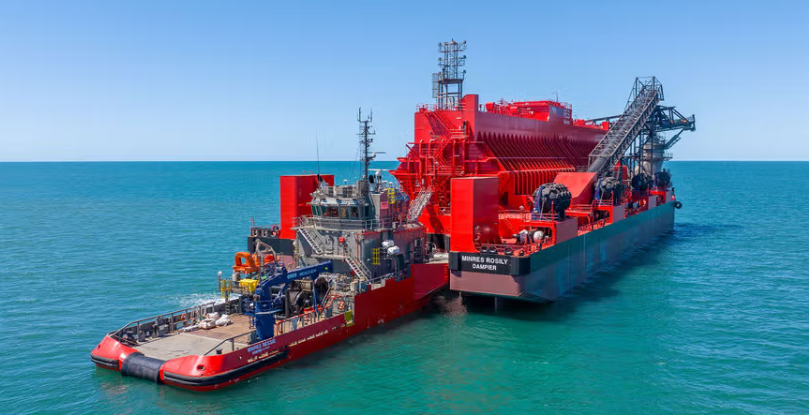
MRL Resources: four 184 m stationary processing barges
Box coolers protected across the asset life on the hardest fouling profile in commercial maritime: an asset that never moves.
Across a class
One configuration, repeated
The same DIN module is the building block from a four-channel workboat system to a 54-channel cabinet, so a configuration proven on the first hull repeats down the build sheet. An Asia-Pacific towage operator now has ENVSonic as standard fitment on every newbuild from its designated builder, across five classes.
Installation has to be faster than the alternative. On that programme the daisy-chain cabling cut install time by roughly five times against multi-cable systems.
Does it need hull penetrations or class-approved fittings?
No. Transducers bond to the inside of the structure, so there are no through-hulls and no welding. The exception is cabling into ballast tanks, which needs class-approved cable penetrations.
What certification does it carry?
FCC, CE and RCM for the complete system: control module, cabling and transducers together. Certificates are supplied in the spec-in pack for class submissions.
How early should it be specified?
At the drawing stage. From the general arrangement we return a transducer plan, cable schedule and integration drawings, so cable routes and the cabinet position go into the electrical package rather than being added afterwards.
What power supply does it need?
ENVS1 runs natively on 12 or 24 VDC with an optional 100 to 240 VAC input. Each transducer is driven at its full 60 W rating in short bursts, averaging 6 to 8 W.