
The problem
Speed and readiness are the job
Pilot boats, patrol craft, line boats and harbour launches work short, hard runs and then sit on a berth with still water around them. That is the pattern fouling likes best: slime and weed take hold at the berth, and the boat pays for it on the next run.
On a fast hull a light coat of growth is enough to take the top off the speed and add to the fuel bill. In the running gear it shows as vibration and lost thrust. In the cooling system it shows as a blocked strainer and a hot engine, on a boat that cannot be late.
The usual answers all take the boat off the roster: a lift-out, a diver, a scrub between tides. With a small fleet and round-the-clock cover, every one of those is a gap.
What it protects
Hull, gear and cooling from one small system
- Hull plating. Transducers bonded to the inboard side of the plating keep the coating clean between lift-outs. The energy travels through steel or alloy plating; the layout is set from the hull material and plate thickness.
- Propellers, shafts, rudders and jet drives. Transducers on the structure beside the gear carry the energy to the wetted surfaces. Nothing is fitted in the water flow.
- Sea chests, strainers and engine cooling. Intakes and baskets stay open, so the engines hold temperature at full power.
One four- or six-channel ENVS1 module usually covers a boat of this size. Each transducer averages 6 to 8 W, so the system can stay on at the berth, which is when it is needed most. Hull protection in detail →
Where it goes on the hull
- Transducers bond to the inboard side of the hull plating, between frames.
- Each one protects a zone of plating; zones overlap along the hull.
- The layout comes from the vessel's general arrangement, hull material and plate thickness.
Port and harbour fleets in service
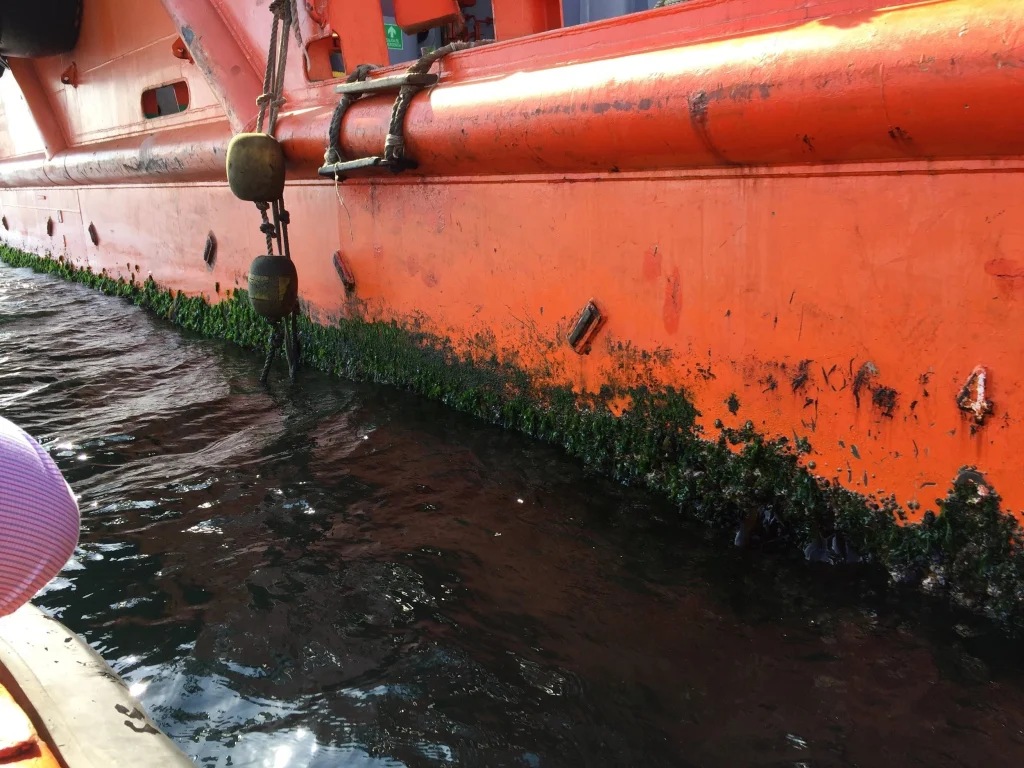
Chilean harbour tug fleet: fuel per engine hour held steady for 18 months
Fuel per engine hour held steady on fitted tugs while the unfitted tug rose 27%.

Australian Ro-Pax ferries: a retrofit that fixed an active fouling problem
Growth on the protected hull and cooling zones under continuous control without taking the ferries out of service.
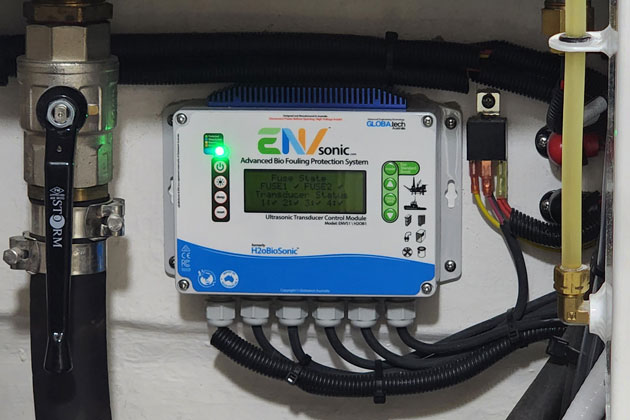
Asia-Pacific tug fleet: from a two-tug pilot to standard fitment across 25
Pilot validated in service; ENVSonic now standard on every newbuild from the designated builder.
On the roster
Fitted without losing the boat
- Fitted afloat or on the hard. Transducers bond inside the hull. Nothing is drilled, and most boats are fitted without a lift-out.
- Works with the paint, not instead of it. It protects the coating, so the boat goes longer between lift-outs and comes out cleaner.
- Propeller channels pause under way. An engine-run signal isolates the propeller transducers while the engines run. Hull and cooling channels run continuously.
- It checks itself. Every channel is tested and calibrated every day, and a fault shows on the display.
A Chilean harbour operator protected its tugs and its launches together, ten vessels in all, and Port of Brisbane workboats run ENVSonic in one of the strictest biosecurity regimes in the world. Named references are available to prospective customers on request.
Will it work on an aluminium pilot boat?
The ultrasonic energy travels through steel or alloy plating, and the transducer layout is set from the hull material and plate thickness. For a composite hull, send the build details and we will say plainly what can be protected.
Does it replace antifouling paint?
No. It protects the coating rather than replacing it: transducers bonded inside the plating stop growth settling, so the paint is not worn away by scrubbing and lift-out intervals extend.
How much power does it draw at the berth?
Each transducer is driven at its full 60 W rating in short bursts, which averages 6 to 8 W. The system runs from the boat’s 12 or 24 VDC supply, with an optional 100 to 240 VAC input for shore power.
Does it interfere with the echo sounder or sonar?
The system is inaudible to crew and operates outside the bands used by navigation sonar.
Does the boat have to come out of the water to fit it?
Usually not. Transducers bond to the inside of the hull and to the dry side of strainers and pipework, so most boats are fitted afloat, between duties.