Joshua David, founder and CEO of GLOBAtech Australia, on where ultrasonic antifouling stands against the new compliance regime. Adapted from the full letter on globa.tech.
Since 2023 four frameworks have landed on shipping: CII grading, the 2023 IMO biofouling guidelines (MEPC.378(80)) and the binding framework being built behind them, EU ETS extended to maritime, and FuelEU Maritime. The IMO Net-Zero Framework sits over the top. Hull cleanliness, fuel choice, voyage planning and port selection are now priced, graded or audited. The industry has been told what to do. How is still wide open.
In the press, “how” mostly means future fuels. All of that is real and necessary. None of it is the answer for the fleet already in the water. The bunkering infrastructure, production volumes and price parity do not exist, and the zero-carbon-capable orderbook is a single-digit percentage of the existing fleet. The transition will happen. It will not happen fast enough to meet the compliance regime that has already arrived.
The single biggest needle move
The only large lever an operator can pull at fleet scale today, on the assets they already own, is hydrodynamic efficiency: a hull, propeller and running gear whose underwater geometry is not disrupted by biological growth. ISO 19030 is the measurement standard. The literature is settled: a meaningfully fouled hull adds between 10% and 30% to fuel burn at constant speed. Fouling costs fuel. Fuel costs carbon. Carbon now costs money.
Of every intervention available to an existing vessel, hull cleanliness is the largest single return on investment, and the only one that compounds across the others. A clean hull makes slow steaming work harder, route optimisation pay more and a wind kite worth installing. It is also the lever the industry has the worst tools for: reactive diver or ROV cleaning in port windows that do not always exist, tightening in-water cleaning and biosecurity rules, and dry-dock intervals stretched for cost. Coatings help. They do not solve.
What the record covers
ENVSonic is the output of twenty years in this category: three platform generations, more than a thousand vessels and industrial assets protected across 14 countries, two patents pending, and every layer from PCB design and firmware to the fleet dashboard engineered under one roof in Australia.
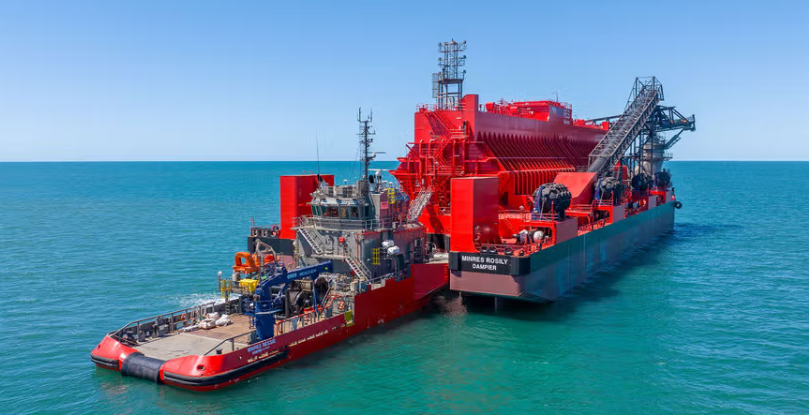
Ultrasonic antifouling is mature and deployable where the physics works cleanly: raw-water systems, sea chests, box coolers, heat exchangers, internal seawater piping, stationary industrial cooling, processing barges and aquaculture infrastructure. On working vessels, from SOVs, tugs and fast workboats to ferries, superyachts and naval hulls, the platform has a multi-decade record on steel hulls with predictable duty cycles.
The unsolved part
The deep-sea commercial hull is where the honest conversation has to happen. Bulkers, tankers, container ships, large RO-ROs and LNG carriers carry most of the industry’s fuel burn and carbon liability, and they are where ultrasonic antifouling as a category has the most work to do. What the technology does extremely well on a 30-metre tug, it does not yet do across the full wetted surface of a 300-metre VLCC: plate geometry, internal structure that absorbs and re-radiates acoustic energy, months at sea between inspections, ballast and laden states, silt in the tanks, and running gear outside the natural reach of transducer placement.
Sea chests, box coolers, cooling loops and engine-room raw-water systems are addressed today with strong evidence. Propeller and adjacent running gear are partly addressed, with patent-pending work aimed at the shaft and propeller area where fouling has a disproportionate hydrodynamic cost. Full external hull coverage at deep-sea scale is the frontier, and the part GLOBAtech is actively engineering.
What buyers should ask
There are good companies in this category and there are datasheets that do not survive contact with the water. Buyers should demand ISO 19030-aligned measurement, real installations with real performance data, transducer engineering they can interrogate, manufacturing they can audit and independent verification wherever it exists. That is the standard the industry should hold suppliers to, and the one we hold ourselves to.
A public commitment
The aim, stated publicly so we can be held to it, is for ENVSonic to become the most important compliance and efficiency technology under the new IMO regime: the platform that keeps fleets in CII band, manages EU ETS exposure, satisfies biofouling guidance, extends dry-dock cycles and burns less fuel per nautical mile of cargo moved. Hydrodynamic efficiency now; alternative fuels as they become available. The two are sequenced, not in competition.
We will name what we have solved, what we have partly solved, and what we have not yet solved. And we will keep building until the unsolved part of deep-sea hull fouling prevention is solved.
Joshua David, Founder & CEO, GLOBAtech Australia · Coomera, Queensland
How the technology works → · Independent research →
Adapted from Clean hulls first, first published on globa.tech, 18 May 2026.